What is Lionfish Mitigation in Belize and Why Does it Matter?
What is a lionfish?
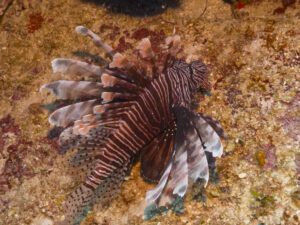
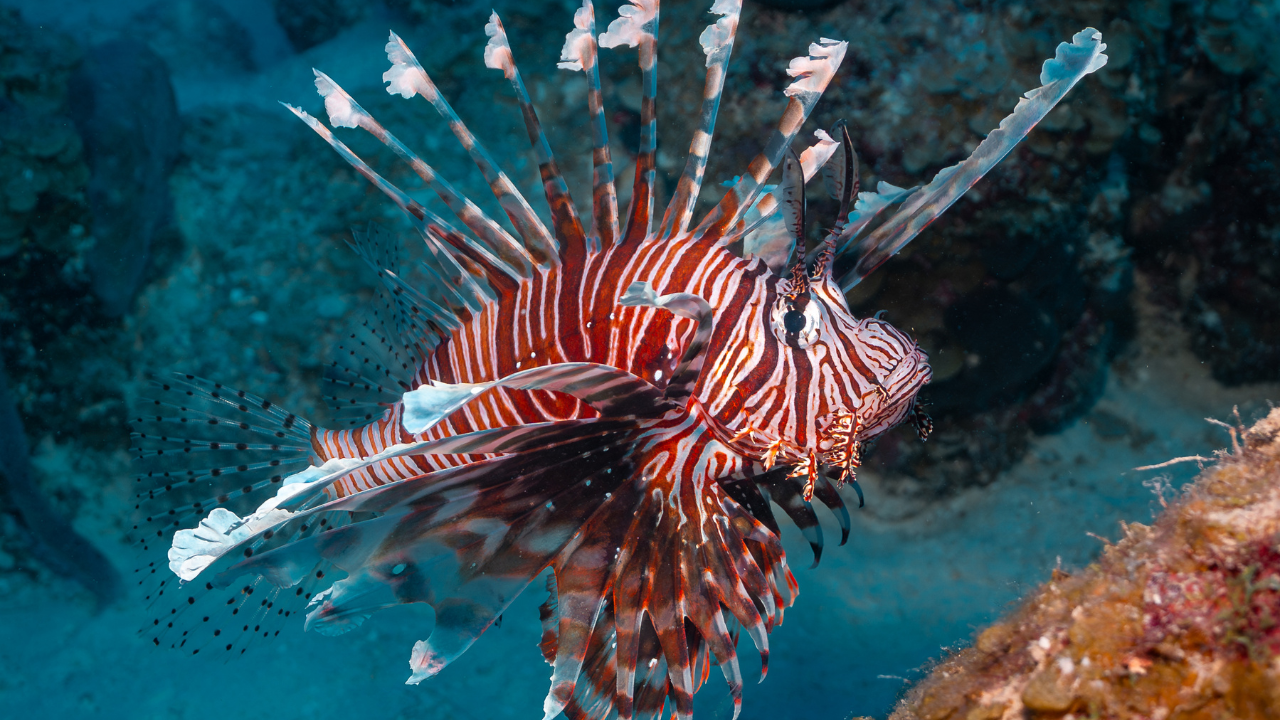
Lionfish may look beautiful, but they are a dangerous, invasive species. They are spiny fish with striped patterns and fan-like fins bearing venomous spines. They are native to the Indian and Pacific Oceans; however, they are extremely perilous in the Western Atlantic.
What are the characteristics of a lionfish?
- They have a lifespan of 30 years.
- They are nocturnal by nature, but still active in the daytime.
- Lionfish have a flexible jaw to eat prey almost two-thirds their size.
- Their venomous spine is located on the dorsal, pelvic, and anal fins. Though the venom is harmful, the meat is safe to eat!
How did lionfish get to Belize?
Lionfish appeared on the US Atlantic coast in the mid-1980s, with claims that they had been released from home aquariums. They have spread throughout the Western Atlantic Ocean and were first recorded in December 2008 at Turneffe Atoll. It was later confirmed in the Belize Barrier Reef in January 2009.
How does lionfish affect the Belize Barrier Reef?
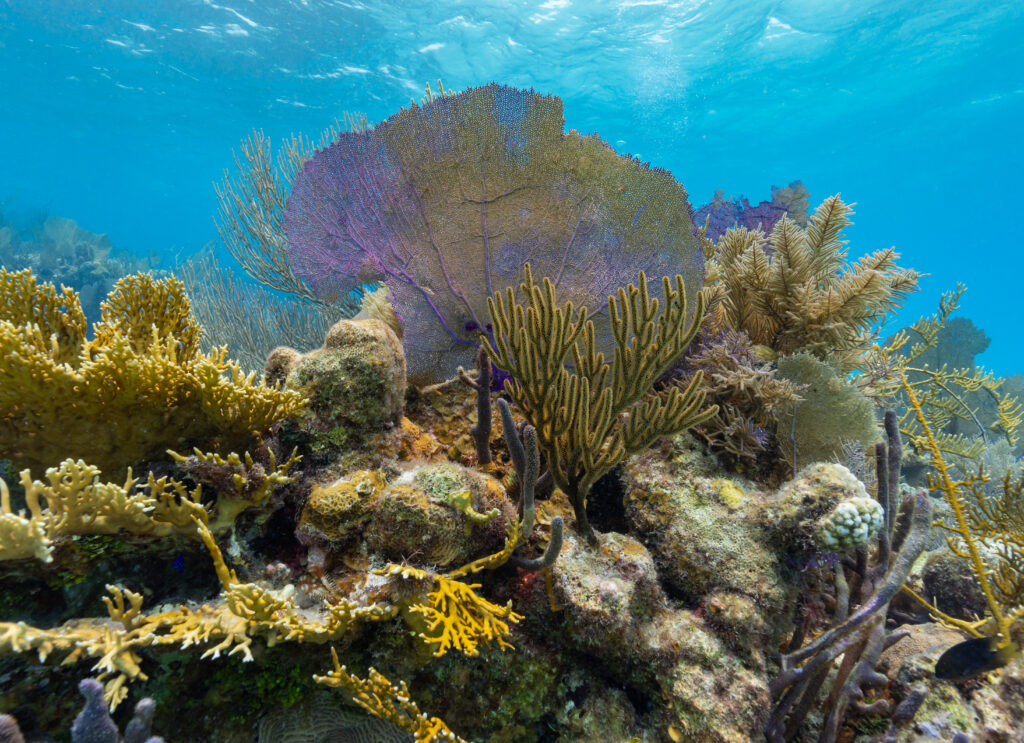
Lionfish have a broad diet, eating hundreds of marine species, including native fishes, like parrotfish, snapper, and angelfish. Parrotfish and angelfish are reef grazers, which are vital for reef health.
Did you know? Parrotfish spend 90% of their day cleaning algae from the surface of coral reefs. When they ingest chunks of coral, parrotfish excrete powdery white sand found on Belize’s beaches.
The consequences of lionfish eating too many reef grazers are algae overgrowth, coral suffocation and degradation, fewer colorful reef fish, and destruction of food webs. These factors affect commercial fishing and reef tourism.
Why are lionfish considered invasive in Belize?
- Lionfish have no natural predator in Belize.
- Lionfish can spawn 50,000 eggs in four days and approximately 2 million eggs in a year.
- Their native average size is 13 inches, whilst their Caribbean average size is almost 19 inches.
- They prey on more than 100 different species, including small crustaceans, coral reefs, and native fishes. They can consume up to 20 juvenile fish in 30 minutes.
- Lionfish can survive at depths beyond safe diving limits, making it difficult to achieve total removal.
What is lionfish mitigation in Belize?
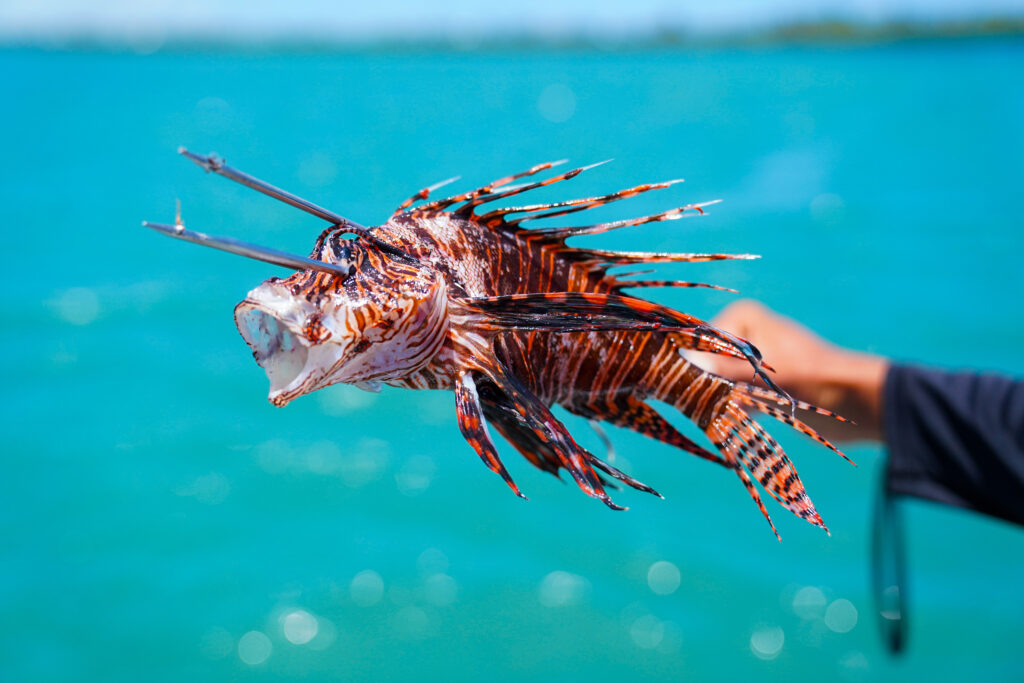
Lionfish mitigation requires human intervention, such as culling them with spearfishing. Belize is a champion for reef conservation! Hence, these efforts have led to economic and research opportunities for Belize. Several organizations and NGOs do their best to reduce lionfish populations, collect research data, and educate the public.
What organizations support lionfish mitigation in Belize?
After the discovery of lionfish in Belize and intensive research, ECOMAR and the Belize Fisheries Department with local stakeholders developed the Belize Lionfish Response & Management Plan 2009-2013. It was a framework to mitigate the invasive species, including outreach workshops, monthly tournaments, and awareness campaigns. Many of these initiatives have influenced present-day efforts to conserve the barrier reef against lionfish.
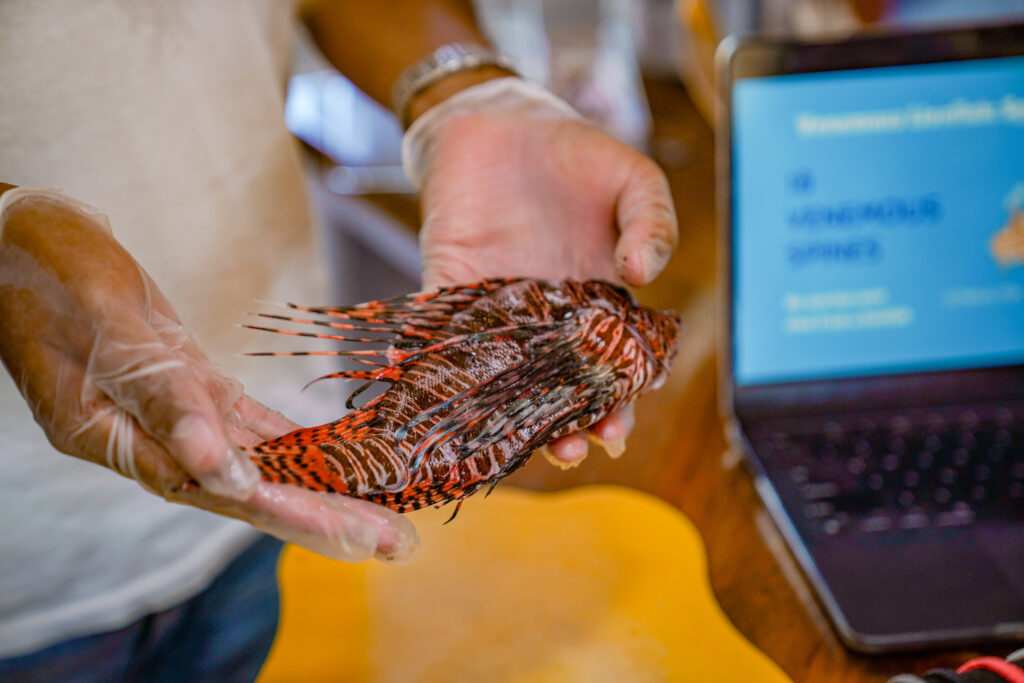
FINS Belize collaborated with North Carolina State University on lionfish population genetics. They collect tissue and DNA samples from lionfish removed from the Belize Barrier Reef for researchers to compare with samples from Florida and other Caribbean destinations. The research helps to understand the future of lionfish invasion and their dispersal patterns. Unfortunately, they will be around for a while!
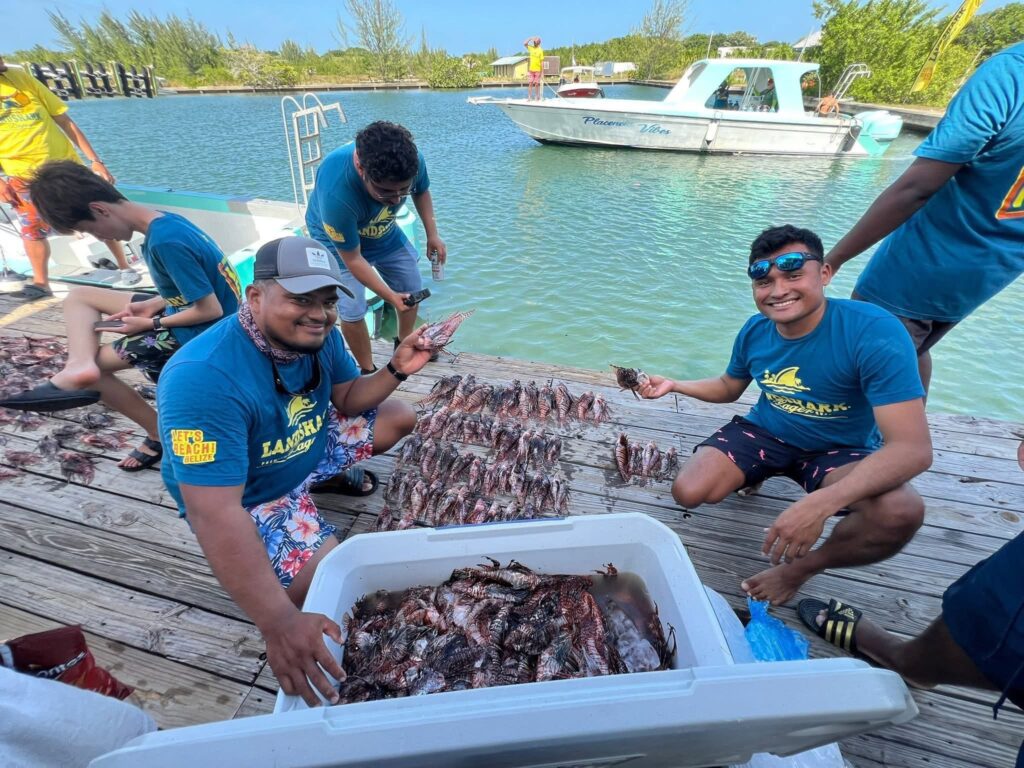
For added excitement, there are lionfish competitions! Organizations like Splash Dive Center, Tobacco Caye Marine Station, and Southern Environmental Association host these initiatives for awareness of the lionfish invasion and boost the number of lionfish culled in a day!
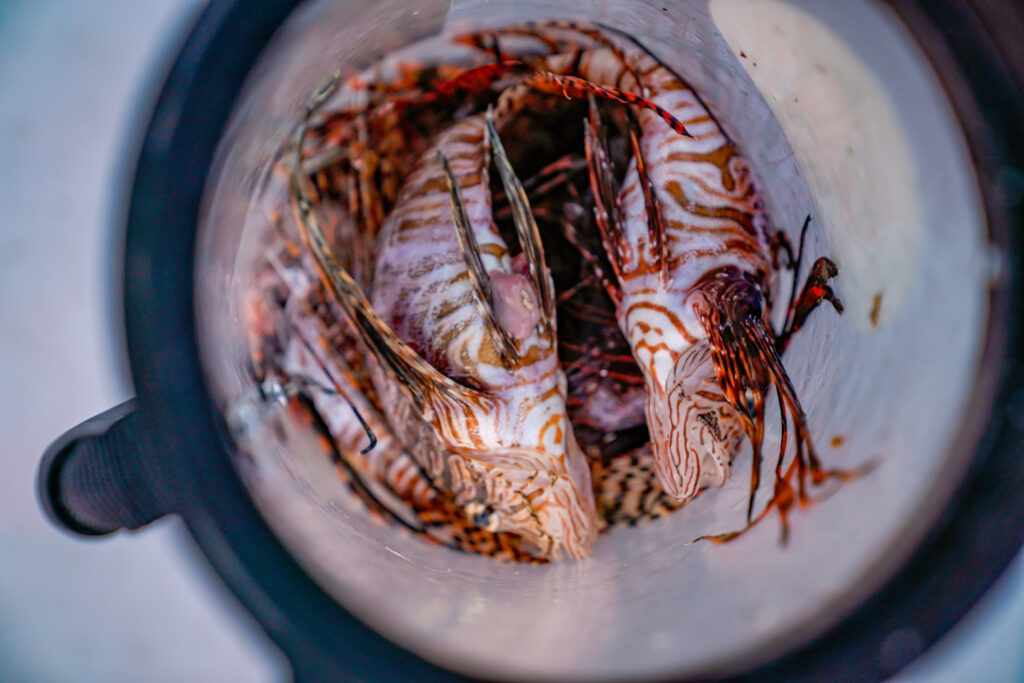
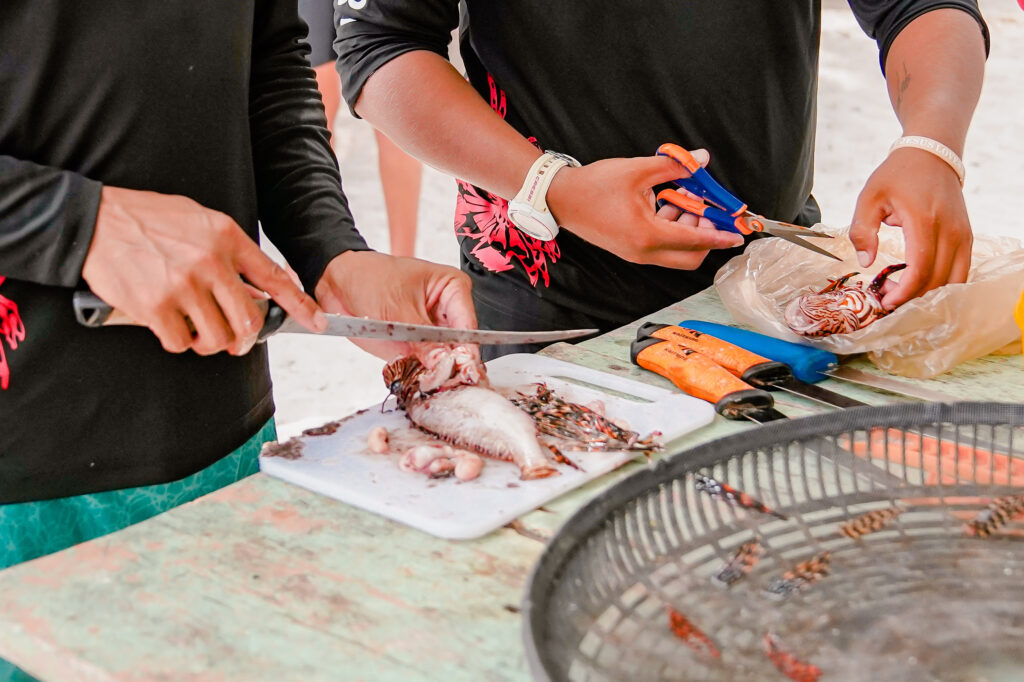
Normally, these tournaments are a way to collect data on the size (length and width), sex, and stomach contents from the lionfish.
- Measuring determines the maturity of the fish.
- Measuring the mouth determines the type of prey it eats.
- Dissecting the fish checks for egg sacks in females.
- Checking the stomach reveals what they recently ate based on the digestive level.
Common prizes between the various competitions include the most lionfish, the largest and the smallest lionfish, and the heaviest haul of lionfish! It’s also a time when artists and vendors come out to showcase their lionfish-inspired products and delectable lionfish cuisines. You have to be around to experience Belize’s fun conservation culture!
Is lionfish safe to eat?
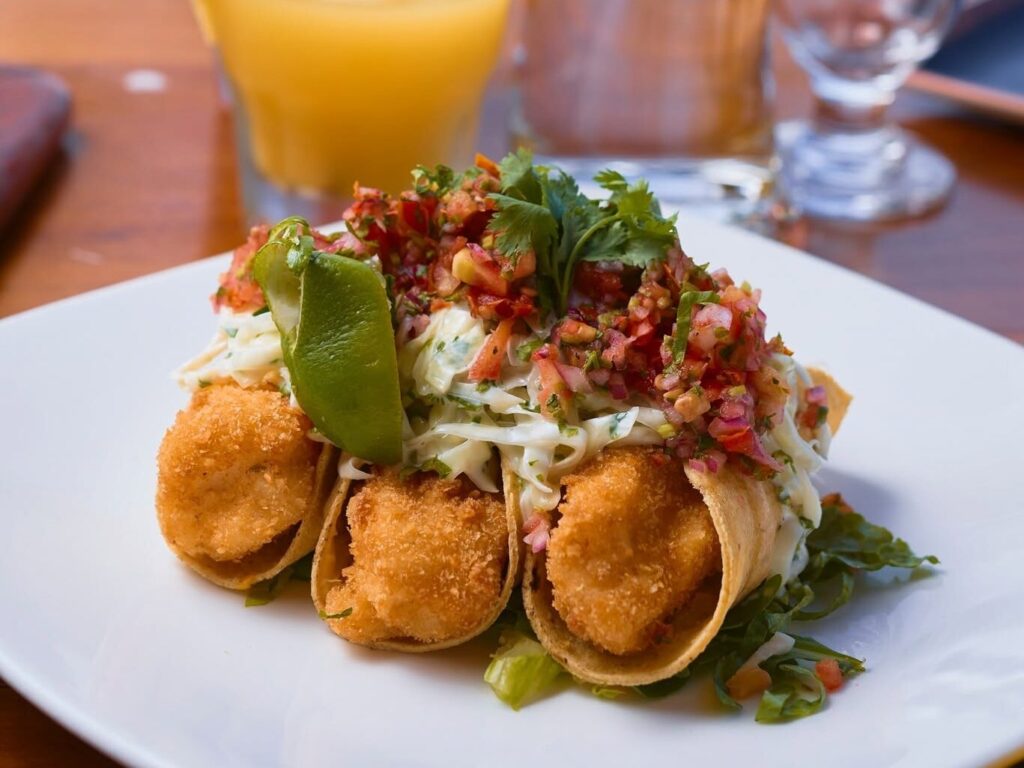
Lionfish is a safe and sustainable seafood option! Though their spines contain venom, the meat is completely safe to eat. Divers and fishers are highly encouraged to overfish lionfish! Commercial fishers can sell lionfish, generating additional income beyond traditional fish and seasonal seafood, like lobster and conch. They have a flavorful white, flaky meat like snapper. Lionfish fillet can be prepared like any other fish – fried, grilled, or made as a mouthwatering bowl of ceviche. Many restaurants in Belize have lionfish on their menu!
Fun Fact: Lionfish is healthy to eat! It has a high concentration of heart-healthy omega-3 fatty acids.
What is the connection between lionfish mitigation and sustainable tourism in Belize?
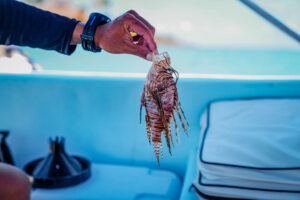
Dive shops offer tours to cull lionfish, giving you a hands-on role in reef conservation! It’s an exhilarating feeling to capture a lionfish, knowing that you are protecting the largest living barrier reef in the world!
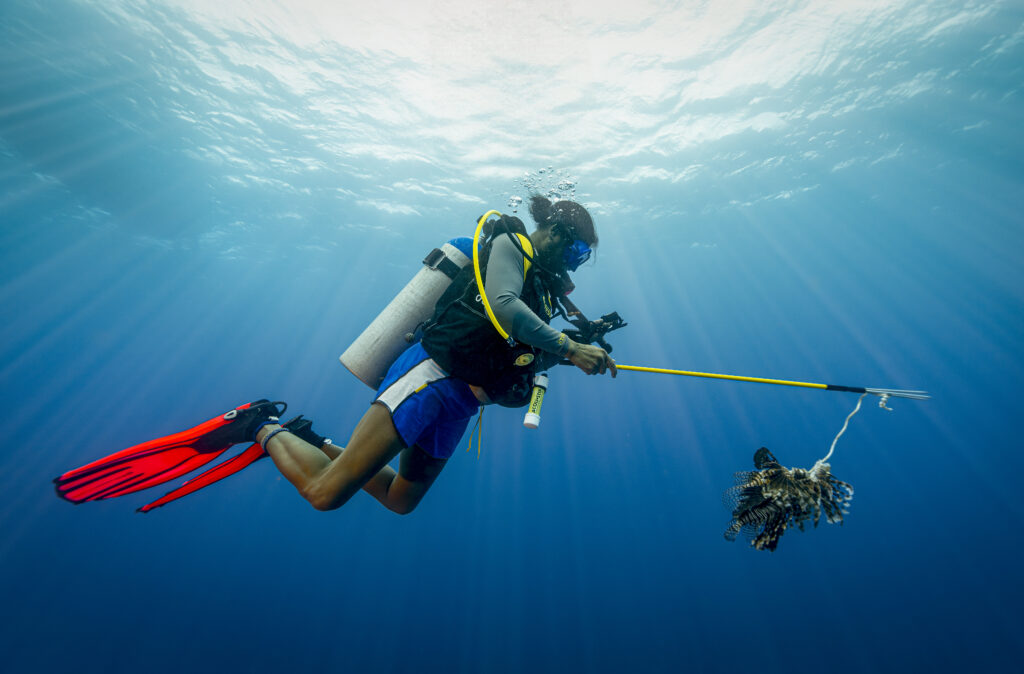
In April 2026, Belize held the Beyond Blue dive summit, and collaborated with FINS Belize to educate and engage participants about lionfish mitigation efforts in Belize. They learned to spear for lionfish using a coconut before submerging into the colorful underwater world to hunt the invasive predator. After successfully capturing lionfish, they prepared delicious dishes with the fillet and made stunning jewelry from the fins.
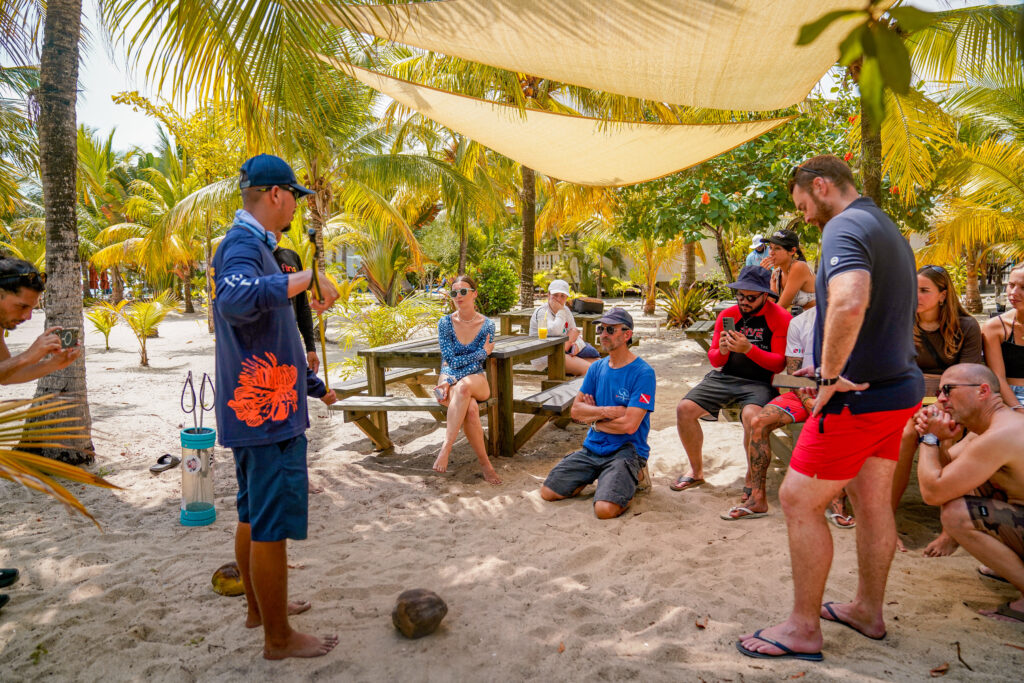
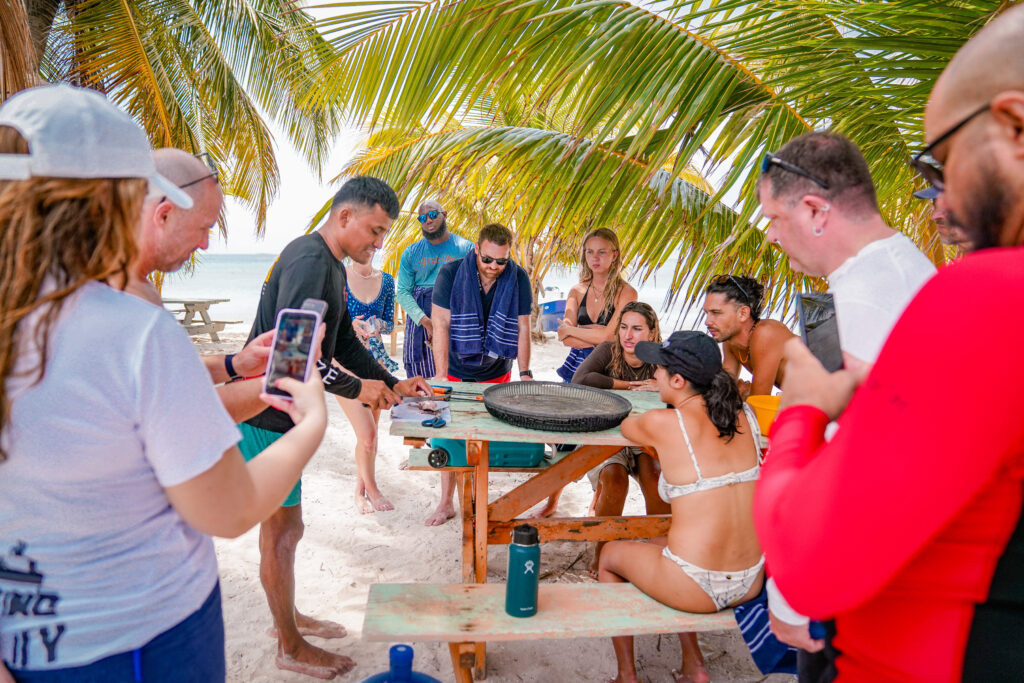
Other lionfish mitigation efforts in Belize
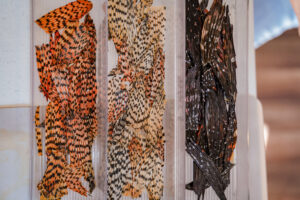
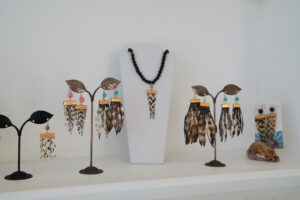
The entire body of the lionfish is put to great use in tourism, gastronomy, and creative arts. Lionfish is also used to create fabulous accessories with their various fins. You can rock an earring, bracelet, bangle, necklace, and ring embellished with lionfish fins, wire, strings, and beads.
Khadija Assales of Kaj Expressions, a local handmade jewelry business, pioneered lionfish jewelry after a marine biologist, Jen Chapman, gave her the idea in 2012. Since then, many entities have incorporated lionfish into their jewelry collection, following Kaj’s “wearable art for a cause.” Her passion for lionfish jewelry even led her to represent Belize at Antigua and Barbuda, where she taught a lionfish jewelry-making class in 2022.
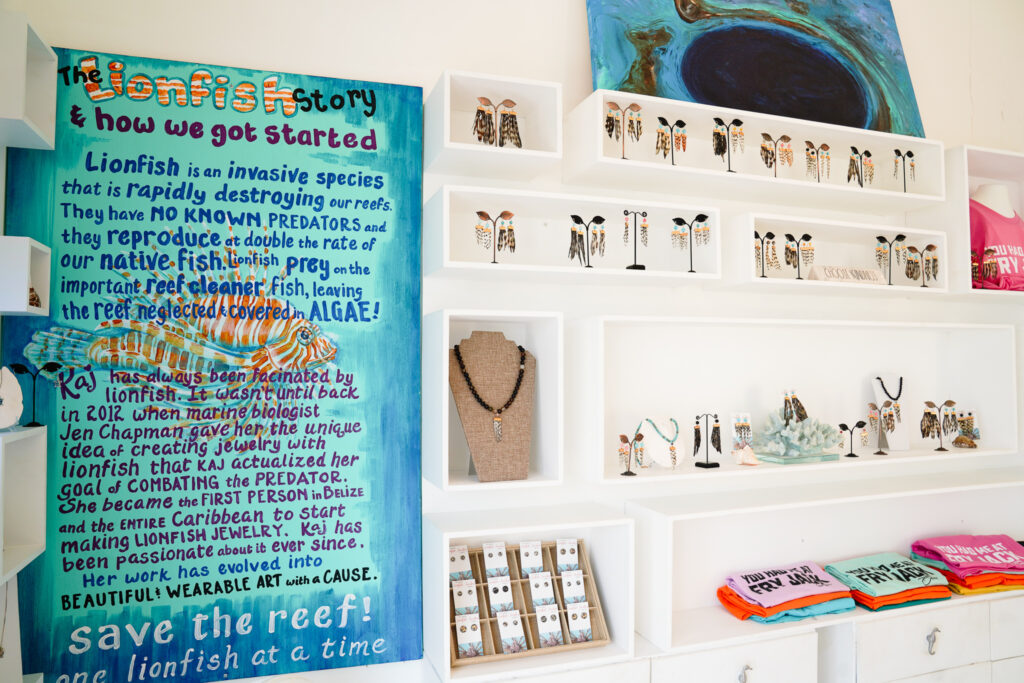
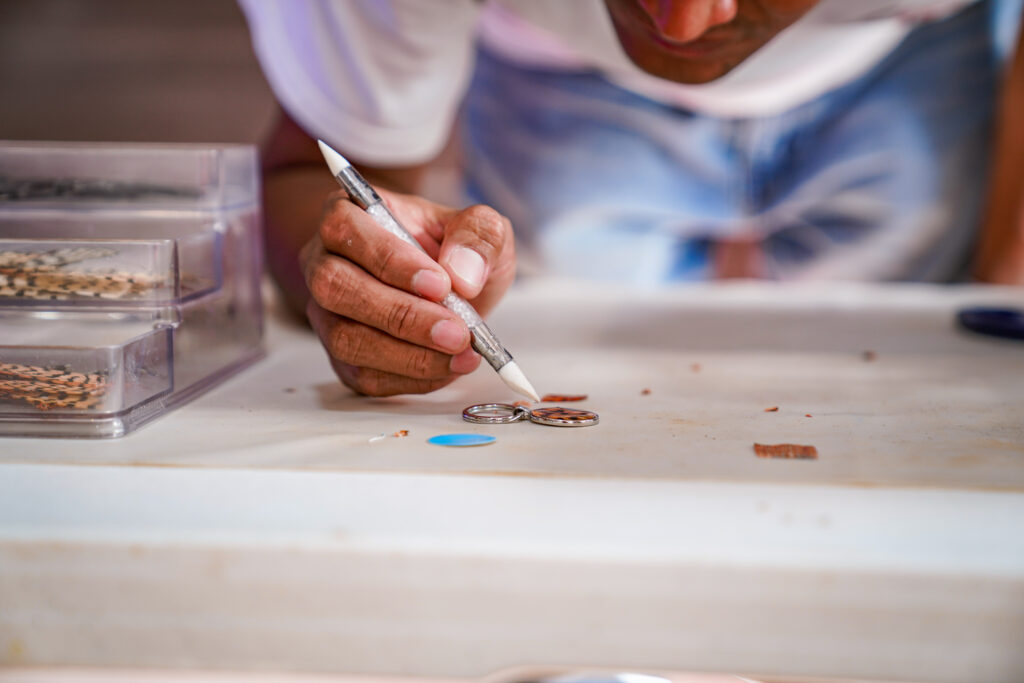
You can purchase a few stunning lionfish pieces for yourself or your loved ones, or if you want to get creative, there’s an option for that too! You can participate in FINS Belize’s jewelry-making workshops to take home a piece of creativity connected to reef conservation.
Aside from jewelry, FINS Belize partnered with Pezzy to pioneer lionfish-based pet treats. They are transforming discarded lionfish byproducts, such as their swim bladder, into a commercially valuable product. Revenues from this partnership go directly into reef conservation operations.
Can tourist help with lionfish mitigation in Belize?
Yes! You can be a part of lionfish mitigation while enjoying Belize’s beautiful landscapes and thrilling experiences. Here are ways you can help:
- If you’re a certified diver, you can participate in a lionfish hunt.
- Support an NGO involved in lionfish mitigation.
- Order and eat lionfish when you see it on the menu.
- Participate in a lionfish jewelry-making workshop.
- Purchase lionfish products, such as jewelry and pet treats.
- Purchase lionfish fillets from a local fisherman and make a yummy recipe!
Belize is home to many marine treasures; however, lionfish continues to be a threat. Everyone plays a role in reef conservation against lionfish – fishers, divers, chefs, entrepreneurs, locals, and even you! Every lionfish removed from the water is a step towards protecting the Belize Barrier Reef.