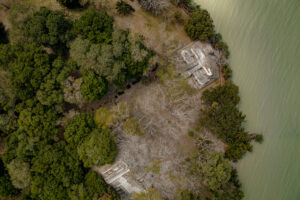
Machen Sie eine kurze Bootsfahrt über die Corozal-Bucht nach Cerros oder eine abenteuerliche Fahrt auf der Straße. Als einziges archäologisches Schutzgebiet in Belize an der Küste liegt Cerros auf einer nördlichen Halbinsel in der Bucht von Chetumal, gegenüber von Corozal Town.
Cerro Maya war das erste Handelszentrum der Maya, das 50 v. Chr. an der Küste errichtet wurde. Maya-Händler kamen mit Kanus von der Küste über die Bucht von Chetumal sowie flussaufwärts über den Rio Hondo im Norden und den New River im Süden.
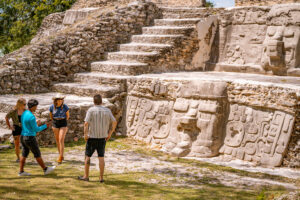
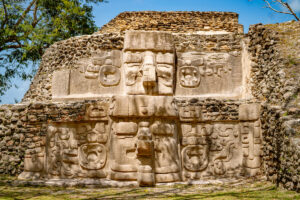
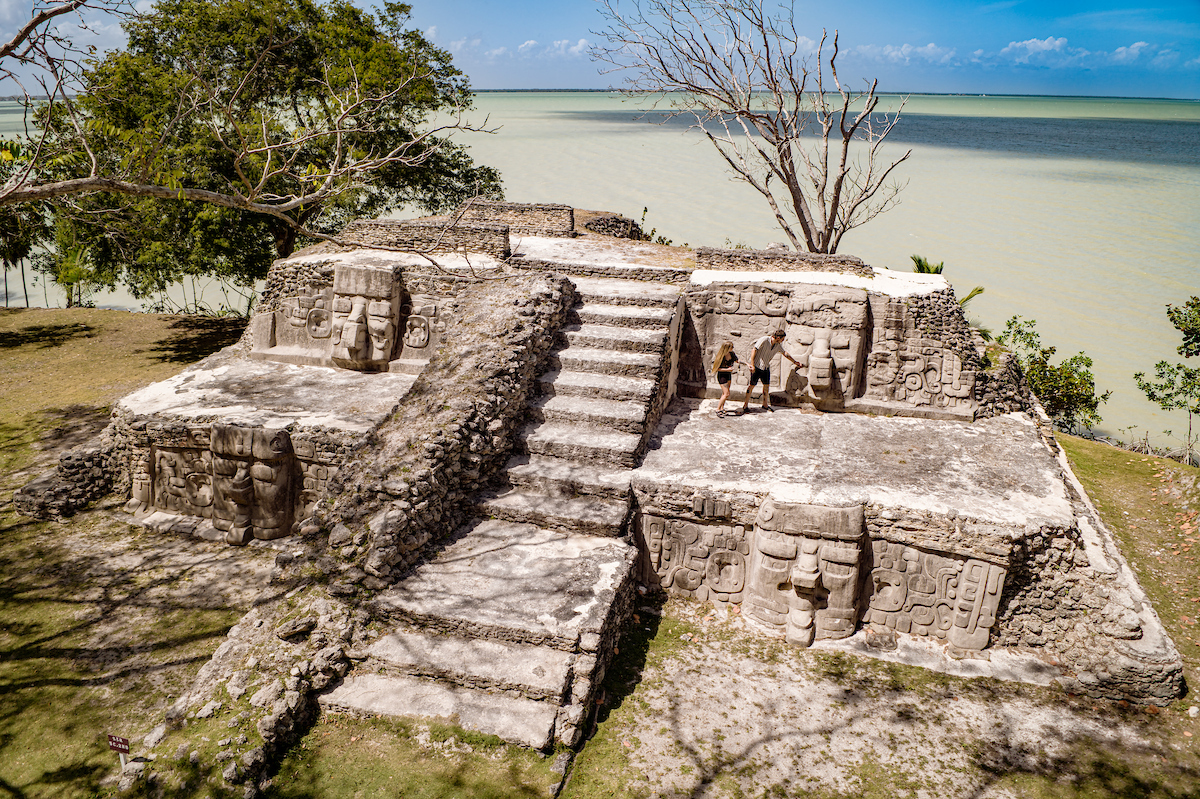
Drei (3) große Gebäude dominieren mehrere Plätze, die von Pyramiden flankiert werden. Zwei (2) dieser Bauwerke sind Fassaden, die mit Stuckmasken verziert sind; diese Masken wurden jedoch inzwischen abgedeckt, um sie vor Witterungseinflüssen zu schützen. Da sich das höchste Bauwerk 72 Fuß über den Platz erhebt, bietet das Panorama von oben einen Blick auf die Bucht von Chetumal, die Stadt Corozal und die Mündung des New River, der zum Gelände von Lamanai führt.
Die hier lebenden Maya errichteten zudem ein ausgedehntes Kanalsystem und betrieben Terrassenfeldbau. Das ist wirklich sehenswert.
Das berühmteste Bauwerk in Cerros ist ein Tempel, der als Str. 5C2nd bekannt ist. Das Bauwerk ist mit zwei (2) Paaren großer bemalter Stuckmasken verziert, die die zentrale Treppe flankieren. Die untere östliche Maske stellte die aufgehende Sonne dar. Ihr westliches Gegenstück war die untergehende Sonne. Die obere östliche Maske stellte Venus als Morgenstern dar, und im Westen war es Venus als Abendstern. Eine Theorie besagt, dass der Herrscher des Ortes, wenn er im Tempel Rituale durchführte, symbolisch in den Mittelpunkt des Kosmos gestellt wurde, um seine Macht und sein Herrschaftsrecht zu demonstrieren. Die vorklassischen Datierungen der Masken an Str. 5C2nd sind hervorragende Beispiele für die frühen Errungenschaften der alten Maya-Astronomie und die Komplexität ihrer Religion und Kosmologie.
Wusstest du schon?
Die hier lebenden Maya errichteten zudem ein ausgedehntes Kanalsystem und betrieben Terrassenfeldbau. Der Kern der Stätte ist von alten Kanälen umgeben, die der Wasserwirtschaft und dem Hochwasserschutz dienten. Der steigende Meeresspiegel hat die Stätte im Laufe der Zeit beeinträchtigt, sodass mehrere Hügel entlang der Nordküste mittlerweile unter Wasser liegen.