Meet The Fierce Stewards of Fragile Ecosystems: Belize’s Fly-Fishers
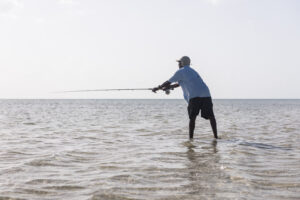
Some call it leisure, some call it sport, and others call it a relentless obsession. But for many Belizeans on the coast and offshore islands, fly-fishing is a livelihood that far surpasses “just” a job; it’s a foundational pillar of a Blue Economy. With each cast of the fly, you join a lineage of anglers who value not just the catch, but the experience, the environment, and the enduring lessons grandfathered in from generations of Belizeans before. Because once baptized by a bonefish, tarpon, or permit in Belize’s knee-deep, bathwater blues, you’ll never look upon its quilt of saltwater flats, lagoons, and seagrass meadows with quite the same nonchalance ever again. For those looking for a vast, untouched Caribbean ecosystem teeming with fish, they’ll find a low-impact, high-value model that emphasizes—and insists upon—the importance of leaving these fragile ecosystems intact with fly-fishing in Belize.
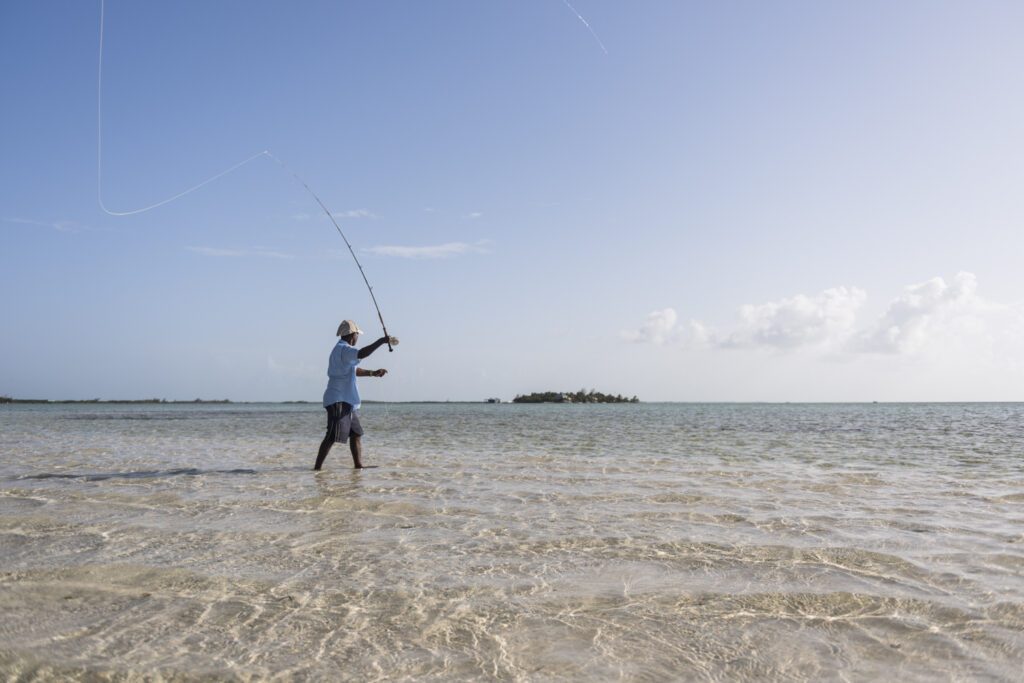
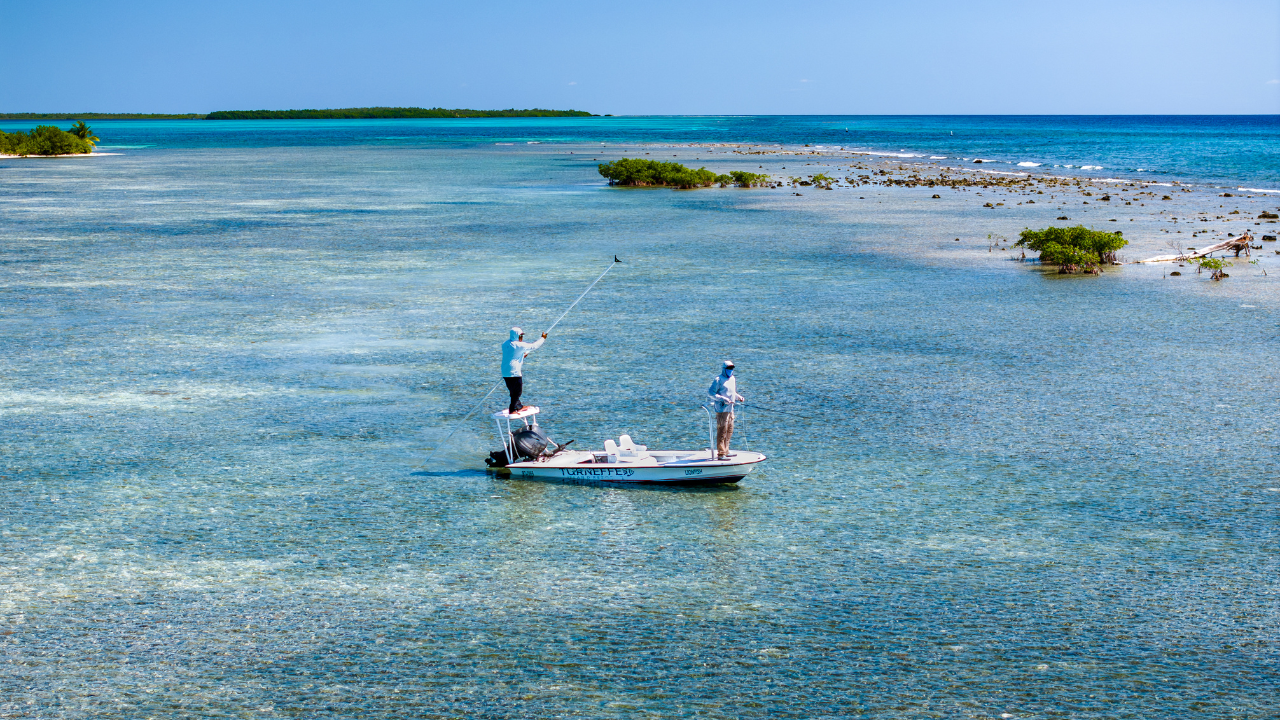
Whether your guide extraordinaire hails from Punta Gorda, Hopkins, Ambergris Caye, or even a luxe fishing outpost of Turneffe Atoll, the average fly-fishing outfitter anywhere in Belize marries an ethos of adventure, marine conservation, and eco-tourism.
Low-impact, High-value: Symbiosis Beyond The Reel
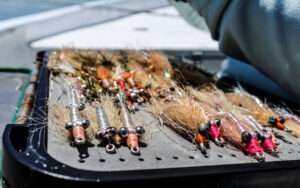
For a country of just 400,000 people, tourism employs approximately 35,000 Belizeans—half of whom are women—as a not-so-trivial figure that ultimately contributes $3.5B in revenue alone. And remember that casual lore of a dopamine-fueled chase towards grand slam fame? To think, how far would you go in pursuit of your white whale? With tourism as the single largest service sub-sector in Belize, fly-fishing plays a pretty big role in a Blue Economy, directly injecting earnings back into local operators through gear, guides, lodging, and more. After all, anglers routinely outspend other tourists threefold—especially when they know conservation is the catalyst to world-class fishing. Back in 2009, Belize was the first country in the world to enact landmark catch-and-release legislation for all three saltwater grand slam species of tarpon, permit, and bonefish. Wading knee- or waist-deep hooks us with a realization that it’d be a different story entirely if these fragile ecosystems were threatened.
Fly-fishing is an absolute art form, but it’s also a whole lot of (evolutionary) luck: spotting a tail feeding ahead of a 80-foot cast means landing a fly in just the right direction, with the right pressure, at the right time. Needlefish sail by, while egrets stand guard: as tenacious as these silvery ghosts escaping an ecosystem top-heavy with predators can be, they’re also inherently vulnerable—for more reasons than one.
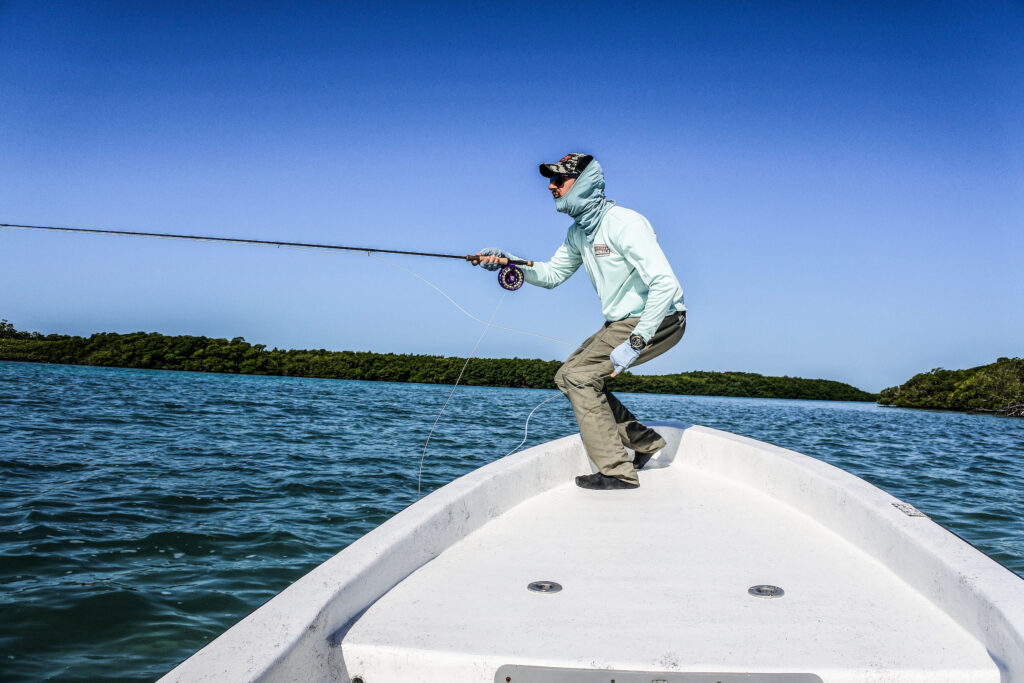
While unsustainable coastal development in other countries have welcomed anglers flocking to their flats only to replace them with condominiums and marinas, it can be a cautionary tale for our own local guides and operators in Belize. Day in and day out, fly-fishers are yet another group on the waters to witness the first-hand effect of a warming ocean or poor decision-making: they’re but a few of the fiercest stewards Belize’s marine environment could ask for. After all, can you actually place a for-profit dollar on wild spaces and the species they hold? One Florida study tried and estimated each bonefish at US$3,500, per year, for a 20-year average lifespan for what anglers typically spend, and that’s just one species of our release-only three. In that case, Belize sits on nothing short of a piscatorial gold mine—by simply preserving it as closely to how fishers first found it, carefully stewarding for this generation and the next.
Advocacy, For This Generation & The Next
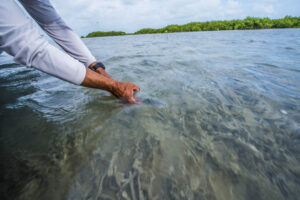
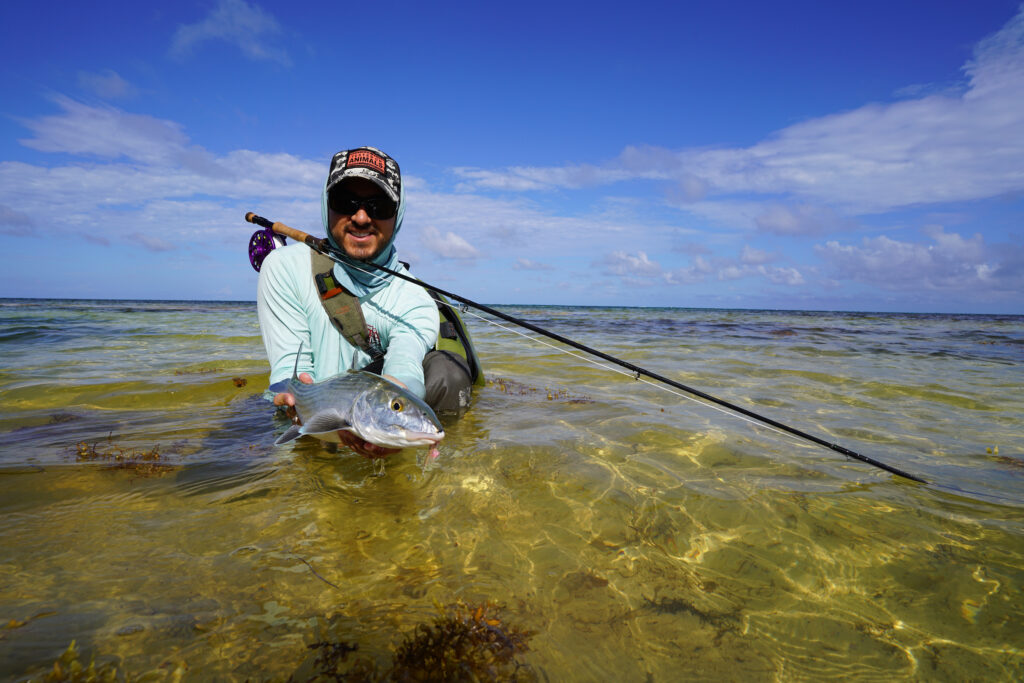
By choosing Belize to land your tarpon, bonefish, or permit, you’re also choosing to support marine conservation through angling best practices and heavy-hitter guide names, who are bucket list experiences in and of themselves. Because after every exhaustive and ostentatious fight on the fly under exact expertise, it’s these guides that know to release the fish quickly (like how keeping them submerged increases survivability, and releasing by current will deflect possible predators from their distress).
Learnt by years on the water, an ethic of environmental education also flows freely from coast to coast: whether through MOUs like Bonefish & Tarpon Trust (BTT) and the Wildlife Conservation Society (WCS) Belize’s most recent in November 2025, or courses like the very first adult training for for licensed tour guides in San Pedro by elite guide and Ocean Hero Awardee Eliceo Arceo, or with Kids in Action to introduce junior anglers to the sport through their fly-fishing segment. Even in competition: the last San Pedro Classic Fly Fishing Tournament’s 50/50 raffle donated over BZ$6,000 between the Bonefish & Tarpon Trust and Omar Arceo’s Youth Fly Fishing Program, while raising more than $800 for the Belize Flats Fisher Association. Their next tournament on August 6-8, 2026 hopes for an even greater impact on the grassroots community.
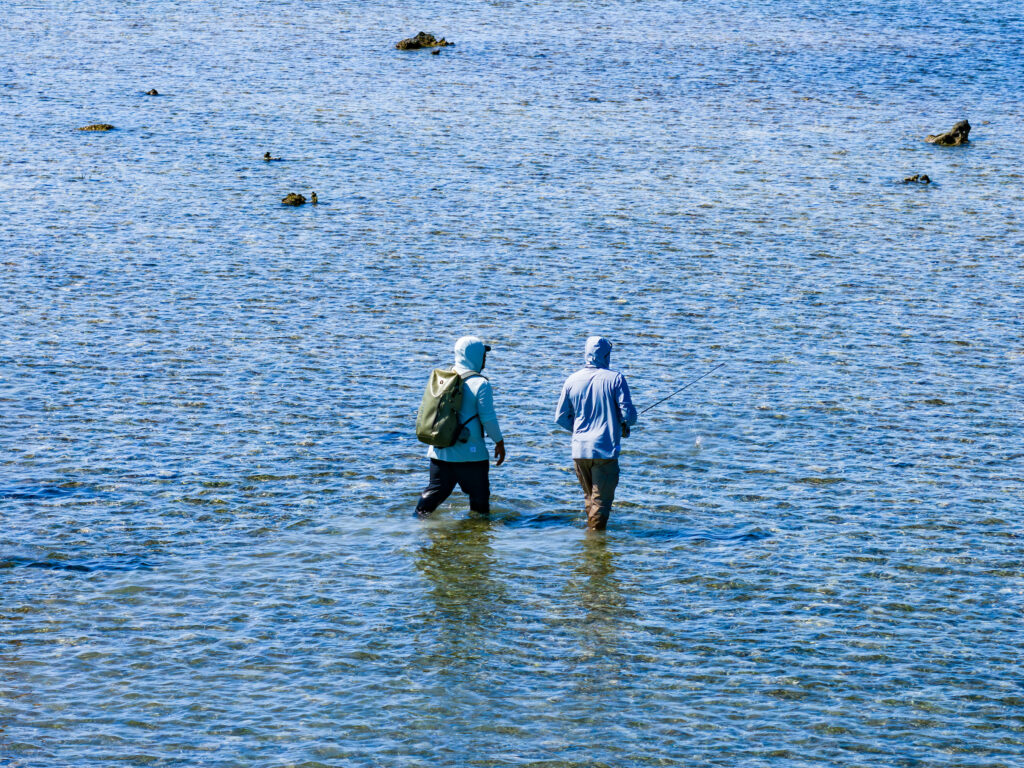
Small acts by the fly fishing luminaries decades ago have since gone on to influence the trajectory of our nation’s relationship to its fishery, infinitely changing the history of Belizean bloodlines that find themselves on these coveted flats. From the legendary Charles Leslie Sr. that helped pioneer the sport in Placencia, to the band of brothers like Eworth and Dennis Garbutt who helped cement Punta Gorda as ‘the permit capital’ of the world. Perhaps the most admirable trait of fly-fishers are their bonafide camaraderie—lending to a strength not easily broken, and a voice by the thousands. When the Government of Belize reacquired Angelfish Caye, colloquially known as the Will Bauer Flats in Southern Belize, it was a call to action from the sons and daughters of the sport who, in their skiffs and pangas, peacefully poured in to sound alarm bells for a precious ecosystem under threat.
As a result of an industry built on a deep respect for the environment that’s instilled into every guest along the way, Belize’s reputation of fly-fishing fame precedes it—for all the right reasons. Ready for your own fish of ten thousand casts?