
4 Small Regions in Belize with a Big Impact
While you’re earmarking 2026 as the year to travel, add a secondary question as you choose between the mental rolodexes of destinations and their experiences: exactly what type of traveler—and impact—are you aiming for? After all, data from the world’s leading hotel groups, travel firms, and trend forecasters hint that 2026 will be the year of quiet escapes, algorithm-shaped itineraries, ultra-personalized retreats, and a return to slower, more intentional travel. Luckily, bite-sized Belize invites travelers to slow down and connect with small regions and their communities through its elemental pull of biodiversity. Not just to sustain, but regenerate, for the better.
With new direct flights—like AirCanada’s Montreal connection or shoestring-savvy Spirit from Fort Lauderdale—offering ease of access to pint-sized Belize, it also means travelers are even closer to these underexplored, unexpected highlights of their trip.
So let 2026 be the year of reconnecting travel with the ‘real’ destination, regardless of how tiny the region, for a grand bias that makes Belize, well, Belize—its local people, our legacies, and each family-run business. Think genuine, meaningful, and localized impact, specifically through community-based tourism. Done well, it enables locals to protect precious habitats, preserve unique cultures, and empower grassroots workers. Harnessing travelers to linger longer andrestore these rural pockets? Talk about an all-around win.
San Antonio Village
Agriculture remains a draw for Cayo District’s San Antonio Village, with multi-generational farmers now opting towards community-based tourism—diversifying income, stabilizing sustainable practices in the field, and for many newer generations, restoring a love of the land. After all, Belize is one of only three CARICOM nations that produce more than 50% of its food. That means inherently, there are far fewer miles between ingredients making their way onto your plate, making for an even smaller carbon footprint per bite.
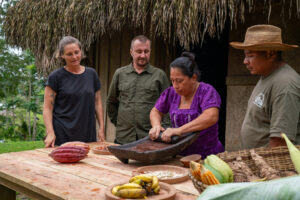
Go directly to the source, to the breadbasket of the country, Cayo, with its winding hills and green acres, to the likes of San Antonio’s Village. Travelers can experience a traditional way of life, where the primarily Maya community welcomes guests with Yucatec hospitality, whether it’s a hotel, homestay, or food-based tour.
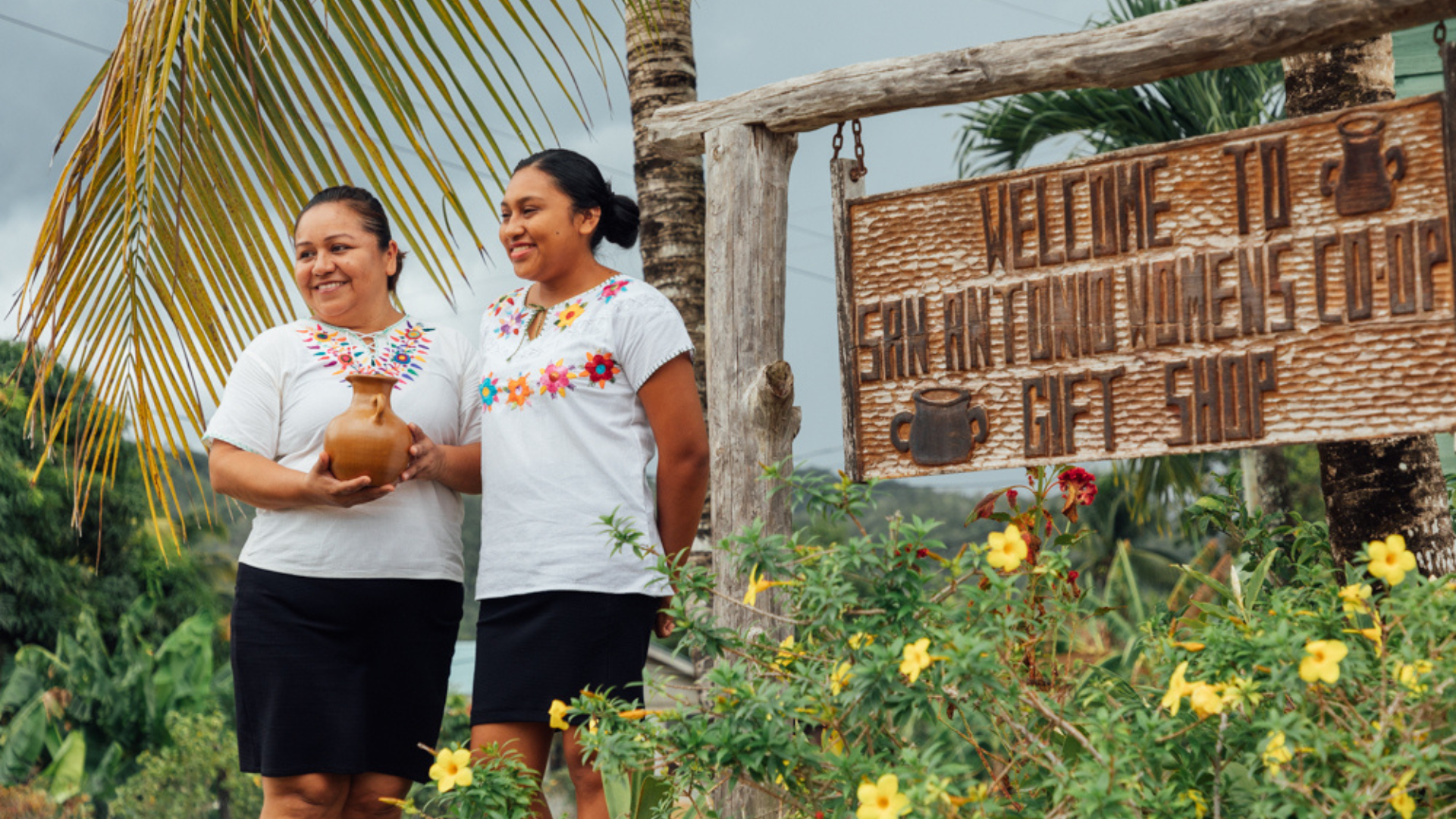
Community-based tourism can be especially beneficial in empowering women, and it’s no different here with Belize’s first all-women co-op. Regardless of your experience, whether it’s peanuts, corn, or coffee, welcome to tanah—translating to home.
Punta Gorda Town
Heritage is Toledo’s bread and butter, thanks to tourism being heavily driven by its community-based organizations (CBOs) and non-governmental organizations. Beyond hosting the highest concentration of Maya settlements in Belize, preservation here looks like experiential stewardship: think traditional homestays, spelunking into Xibalba, summitting ancient temples, and experiences endemic to the region. Authentic and transformative as the country’s southernmost district, Toledo has often remained at the very edge of the average tourist’s map, attracting culturally curious visitors seeking to explore and contribute to conservation, community partnerships, and locally led initiatives.
In Punta Gorda Town, they all converge as living culture experiences; although more than half of Toledo’s population identifies as Mopan and Kekchi Maya, grassroots-organized experiential tours traverse through Mestizo and Garifuna traditions and practices too. During a homestay, guests are assigned on a rotating basis to ensure a fair spread of business between families.
Little Water Caye
In Southern Belize, the future of farming isn’t limited to the land: it’s offshore, just beneath the surface of gin-clear waters as golden clusters of seaweed. You might see Eucheuma isiforme listed on cafe or restaurant menus in coastal communities, like Hopkins or Placencia, and it’s almost entirely supplied by locals of the Placencia Producers Cooperative and Belize Women’s Seaweed Farmers Association.
Socially inclusive, Belizean men, women, and youth are being ushered into climate-smart and artisanal aquaculture, which also doubles as a refuge for Belize’s most economically important fisheries to shelter juvenile lobster and conch. When traceability of ingredients—and their nutritional value—matters most, you can chart your course for the seaweed ‘line crops’ of Little Water Caye, free from mainland runoff. Marine conservation-conscious snorkeling and diving tours offer a quick tour or volunteer opportunities, though you don’t need to venture to sea to support Belize’s Blue Economy. Simply order ‘seaweed’ as an addition to your next coffee or smoothie, purchase seaweed-based locally-crafted cosmetics, or grab your own travel-friendly dehydrated bunch.
Caye Caulker
Caye Caulker, a petite mile-wide isle a mere 30km away from the mainland, made waves when it became the first Climate Smart Island for Belize—committing an entire village to a more climate-resilient future. Home to maybe 3,000 residents, the close-knit Caye Caulker packs a whole lot of personality atop an undercurrent of generational environmentalism. It’s hard not to, when the coral reef in your backyard sports the highest concentration of marine biodiversity in the Atlantic.
It’s why Caye Caulker was chosen as one of three pilot islands in the Caribbean for support in adapting to climate change and mitigating its effects on a habitat this spectacular, this delicate. Beyond local tour operators fostering eco-friendly experiences or generational community norms (like opting for walking, biking, or golf carts over the handful of cars even found on the caye), the entire island is slowly shifting towards climate-smart transport, infrastructure, energy, water, waste treatment, and yes, tourism.
Most handy during droughts or natural disasters for a smaller carbon footprint? Installing 21 hydropanels and water fountains at a local primary school to convert humidity into clean, drinking water—100 liters a day, under the right conditions—that trickles into the school and its surrounding community as a steady, single-use-plastic-free source that’s completely off-grid.