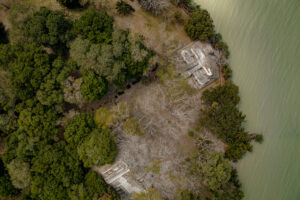
Vous pouvez rejoindre Cerros en quelques minutes en bateau en traversant la baie de Corozal, ou bien opter pour un trajet routier plus aventureux. Seule réserve archéologique du Belize située sur la côte, Cerros se trouve sur une péninsule au nord de la baie de Chetumal, face à la ville de Corozal.
Cerro Maya fut le premier centre commercial maya construit en bord de mer, en 50 avant J.-C. Les commerçants mayas arrivaient en pirogue depuis la côte en passant par la baie de Chetumal, mais aussi en remontant le Rio Hondo au nord et la New River au sud.
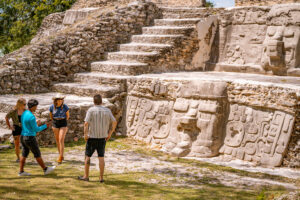
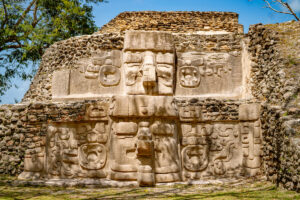
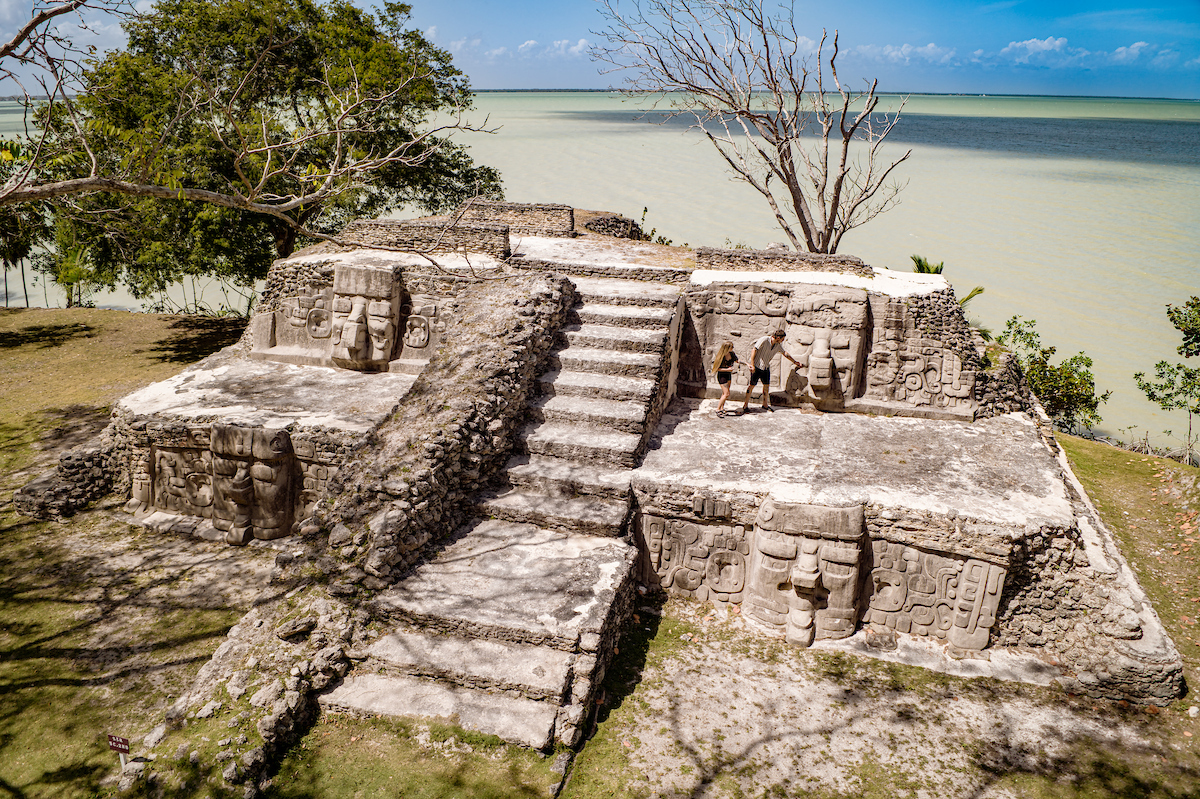
Trois (3) grands édifices dominent plusieurs places bordées de pyramides. Si deux (2) de ces structures présentent des façades ornées de masques en stuc, ceux-ci ont depuis été recouverts afin de les protéger des intempéries. La structure la plus haute s'élevant à 22 mètres au-dessus de la place, le panorama depuis le sommet offre une vue sur la baie de Chetumal, la ville de Corozal et l'embouchure de la rivière New, qui mène au site de Lamanai.
Les Mayas qui vivaient ici ont également construit un vaste réseau de canaux et pratiquaient l'agriculture sur des terrasses. C'est vraiment un spectacle à ne pas manquer.
Le bâtiment le plus célèbre de Cerros est un temple connu sous le nom de Str. 5C2nd. La structure est ornée de deux (2) paires de grands masques en stuc peint qui encadrent l'escalier central. Le masque inférieur est représentait le soleil levant. Son homologue occidental représentait le soleil couchant. Le masque supérieur est représentait Vénus en tant qu'étoile du matin et, à l'ouest, Vénus en tant qu'étoile du soir. Une théorie soutient que lorsque le souverain du site accomplissait des rituels dans le temple, il était symboliquement placé au centre du cosmos afin de démontrer son pouvoir et son droit de régner. Les dates préclassiques des masques de la Str. 5C2nd constituent d'excellents exemples des premières réalisations de l'astronomie maya antique ainsi que de la complexité de leur religion et de leur cosmologie.
Le saviez-vous ?
Les Mayas qui vivaient ici ont également construit un vaste réseau de canaux et pratiquaient l'agriculture sur terrasses. D'anciens canaux, utilisés pour la gestion de l'eau et la maîtrise des crues, entourent le cœur du site. L'élévation du niveau de la mer a affecté le site au fil du temps, et plusieurs monticules se trouvent désormais sous l'eau le long de la côte nord.